
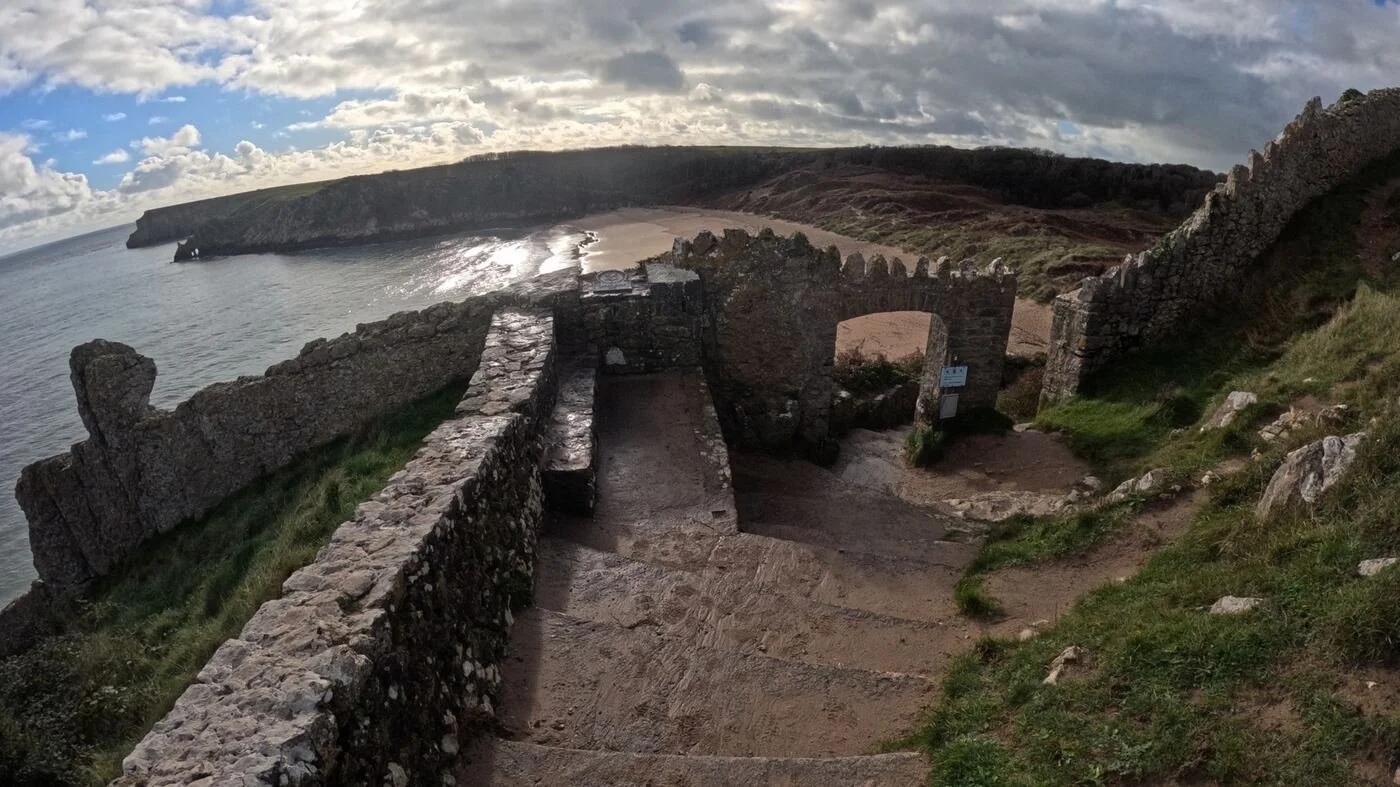
The arched gateway leading to Barafundle Bay, Stackpole Estate, Pembrokeshire
How It All Began
Every character in The Stackpole Fellowship started somewhere real.
The human origins of The Stackpole Fellowship
There is a place on the Welsh coast that I have carried with me for a long time.
A place of vanished elegance. Ancient. Unhurried. Real.
I came here to bring a childhood story to life. Where the land meets the sea.
But the story was already here.
An estate‑owning family. A rescued seal pup. A mischievous otter. A grandson and his grandfather.
The Stackpole Fellowship, set here in 1945.
It is about courage, community and friendship.
Learning to ask for help in a world that feels too big.
But really - it is about being seen.
I first began losing myself in the Stackpole Estate as a restlessly curious eighteen-year-old in 1980. I would walk its paths and wonder about the generations who had walked them before me - and about the stories held within its interwoven world of lakes, woods and coastline.
As the son of a local boilermaker and seamstress, the world of Stackpole Court and its estate-owning family was far removed from my own. Perhaps that was part of its fascination.
I could not have known then that something had been planted in my mind. It took encounters many years later - with a lone seal pup on a Californian shore, an otter among the Bosherston Lily Ponds, a painting in Milford Haven, and memories of people I love who are no longer with us - for those beginnings to find one another.
Eventually, they became The Stackpole Fellowship: a rescued seal pup, a mischievous young otter, two children from different worlds, and a grandfather who knows when to help - and when to stand back. Set here, at Stackpole, in 1945.
Why 1945? It is a moment of rebuilding, resourcefulness and community. Those ideas and values feel important now. Small acts of care mattered. So did the work of rebuilding lives and communities after years of war. It was a time of recovery, uncertainty and hope. I wanted the story to live in that moment of healing and renewal.
“Each of these five characters began as a moment I can date, a place I can stand in, or a person I can name.”
Character
Niffy‑Nooh
A lone seal pup on a Californian shore
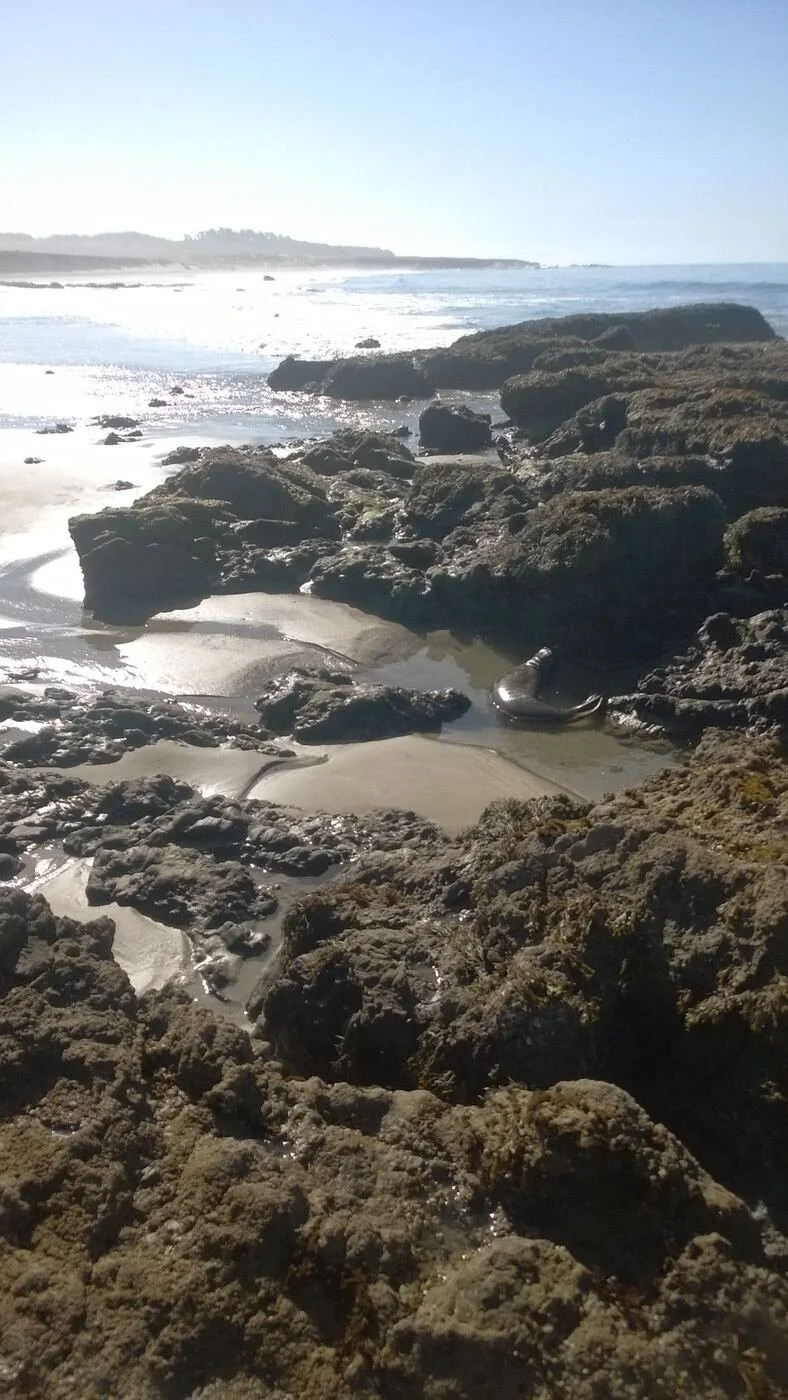
In 2015, my wife and I travelled along the west coast of the United States through Big Sur. Near San Simeon, we came across a young seal resting alone amongst the rock pools.
There was something about that vulnerable animal, small against the scale of the Pacific coast, that stayed with me. Nearby stood the extraordinary Hearst estate: the remains of one world looking out over a wild and timeless coastline. For years, the memory simply sat there.
Then it found its way home. Stackpole offered something I recognised from that Californian encounter: a once-grand estate beside an elemental coast, with seals offshore - that I had watched from afar with my family when young - and an extraordinary meeting of sea, lakes, woodland and limestone cliffs.
The story I had been carrying had, in a sense, been on my doorstep all along.
San Simeon, California, 2015.
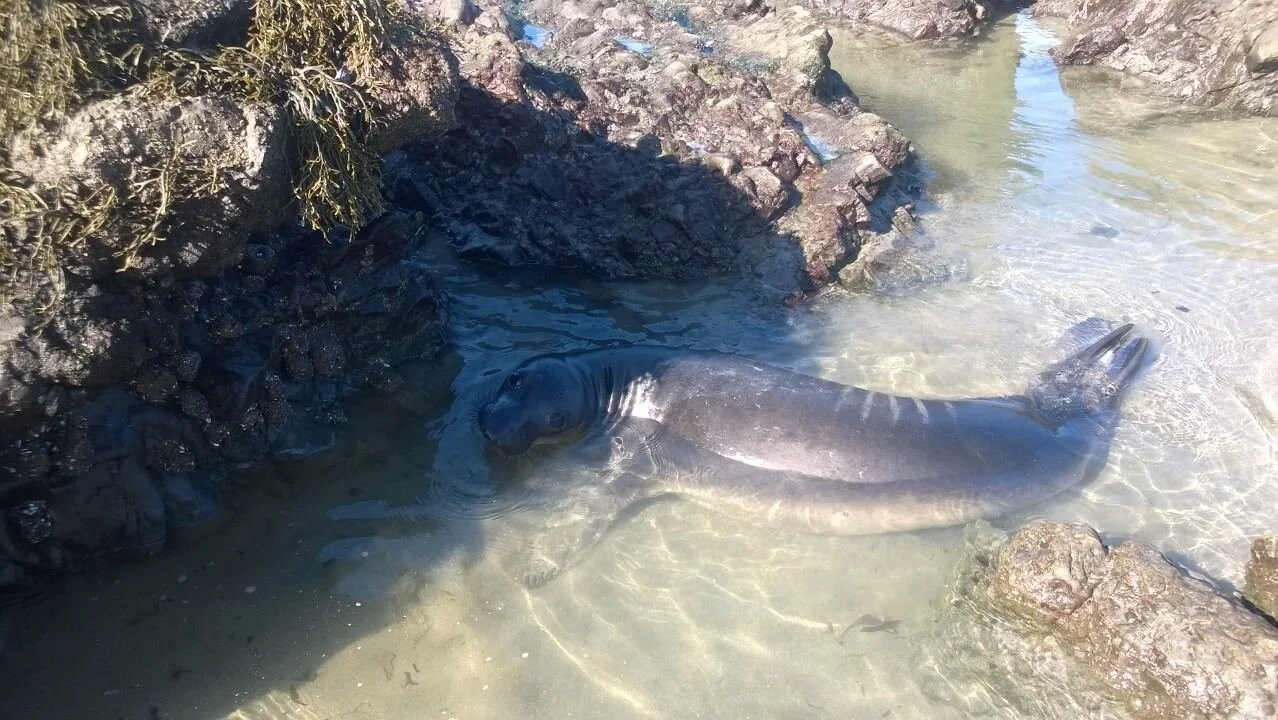
The young seal that remained in memory long after the journey home.
From encounter to character
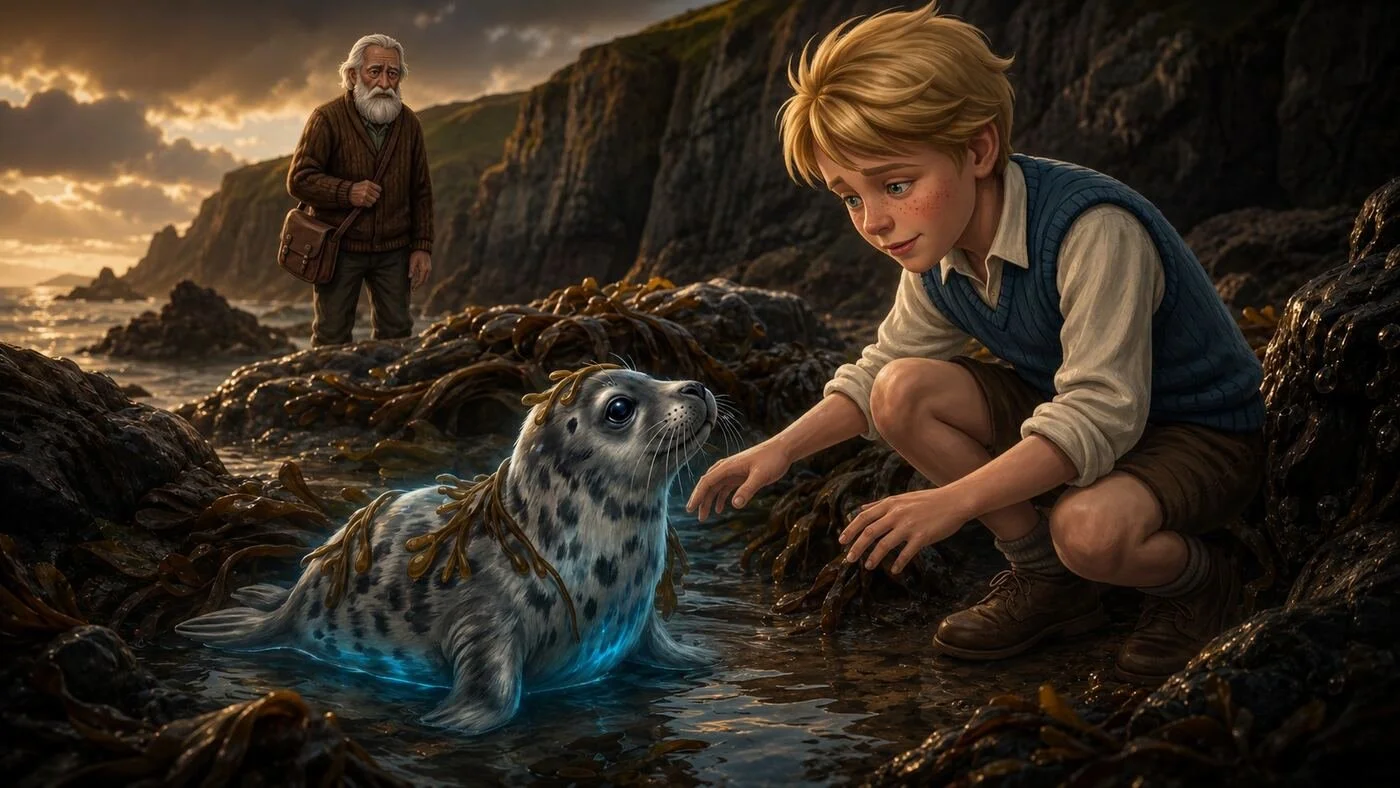
Niffy-Nooh became an Atlantic grey seal pup whose blue glow allows something normally hidden to be seen. When Niffy is uncertain or frightened, the glow becomes brighter.
But the glow does not have to disappear before Niffy can move forward. That became important, because courage is not always the moment when fear goes away. Sometimes it is what happens while the glow is still there.
And for all his fear, Niffy-Nooh knows things that others do not. He is of the sea and feels the rhythm of the tides in the air around him. Niffy feels what is coming before it arrives. The sea remembers him and holds him dearly.
The scent of the sea clings to the pup, especially the bladderwrack seaweed that has kept his tired body afloat in the rock pool. It is that salty, seaweed smell that prompts the boy who rescues him to call him Niffy-Nooh.
At the heart of Niffy’s story is one simple encounter between a vulnerable animal and a child who chooses not to turn away:
“Niffy‑Nooh, I see you.”
Sometimes being seen is where courage begins.
Character
Otto‑Fynn
An otter found because somebody knew where to look
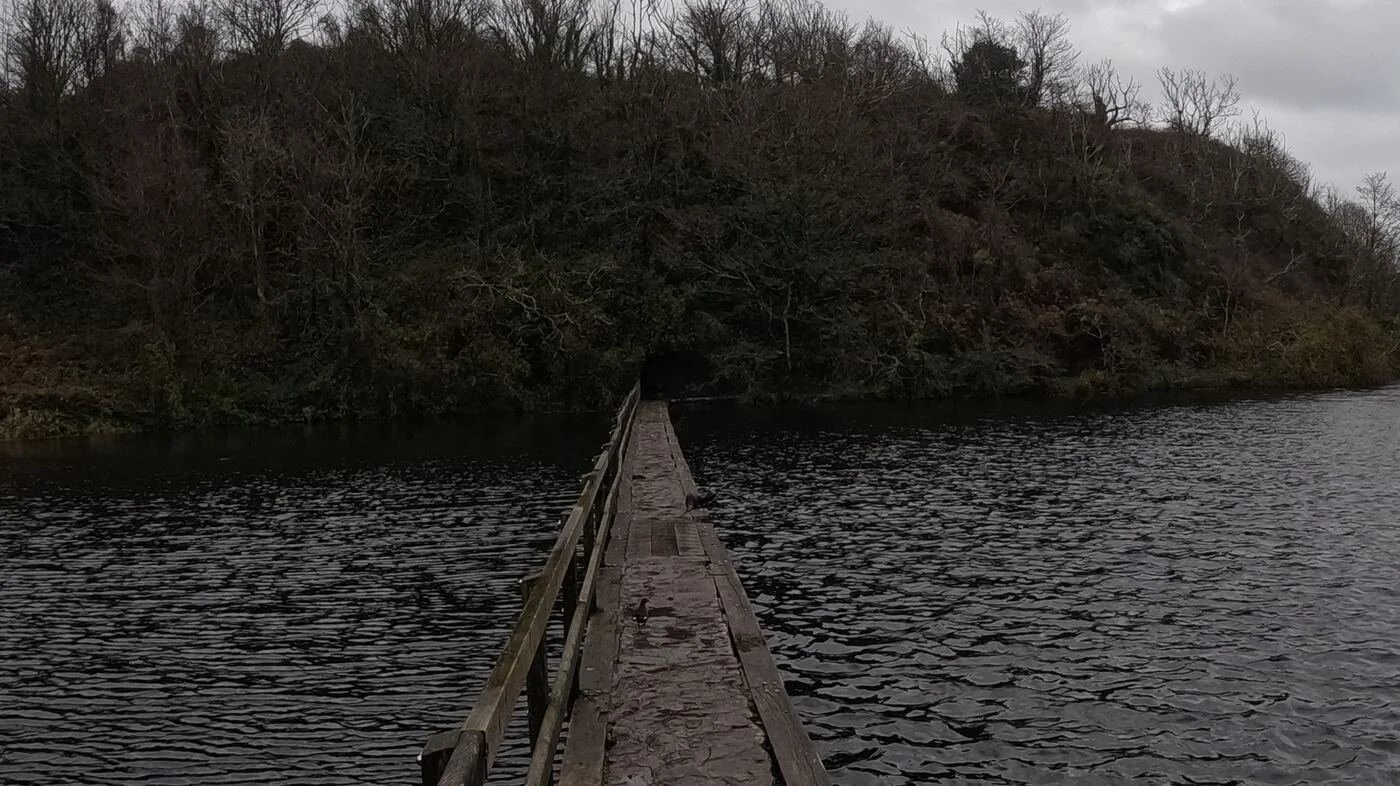
Bosherston Lily Ponds, Stackpole Estate — where Dai taught me how to look.
Watch my original otter footage
My original otter footage, filmed at Bosherston Lily Ponds.
Otto-Fynn began much closer to home. It was early morning at Bosherston Lily Ponds. On one of my visits to Stackpole, I happened upon a local man called Dai - “the only Dai in Bosherston” - who had once worked as a water officer on the estate.
Dai knew the lakes and had a deep affection for the romp of Eurasian otters that lived there, in the way people sometimes know a place after watching it carefully for years. That morning, I followed him. We walked quietly along the root-strewn paths beside the water, his sheepdog ahead of us moving silently, as if guided by an invisible thread rising from the water, while Dai began teaching me how to look.
You did not always see the otter first. Sometimes you saw the signs: a movement, a disturbance, a rhythmic plume of bubbles travelling beneath the surface.
And then the otter appeared. It was magical.
Dai also told me about the harder edge of a young otter’s life: how a pup could suddenly find itself alone, pushed out from the security of the family group. That idea stayed with me. It helped shape Otto-Fynn not simply as mischievous, but as a young survivor who covers vulnerability with movement and bravado.
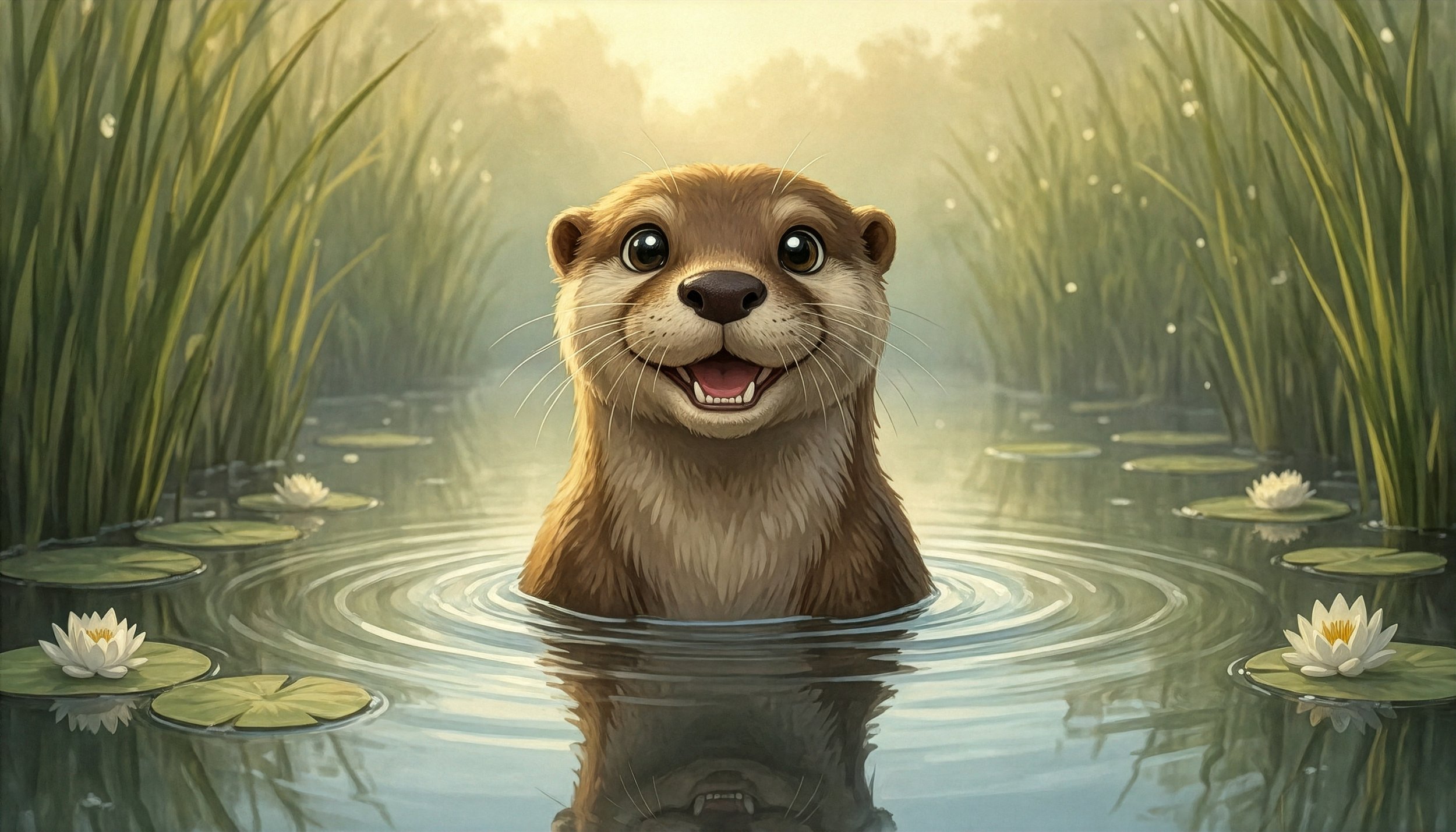
Character visualisation inspired by my original encounter.
From observation to discovery
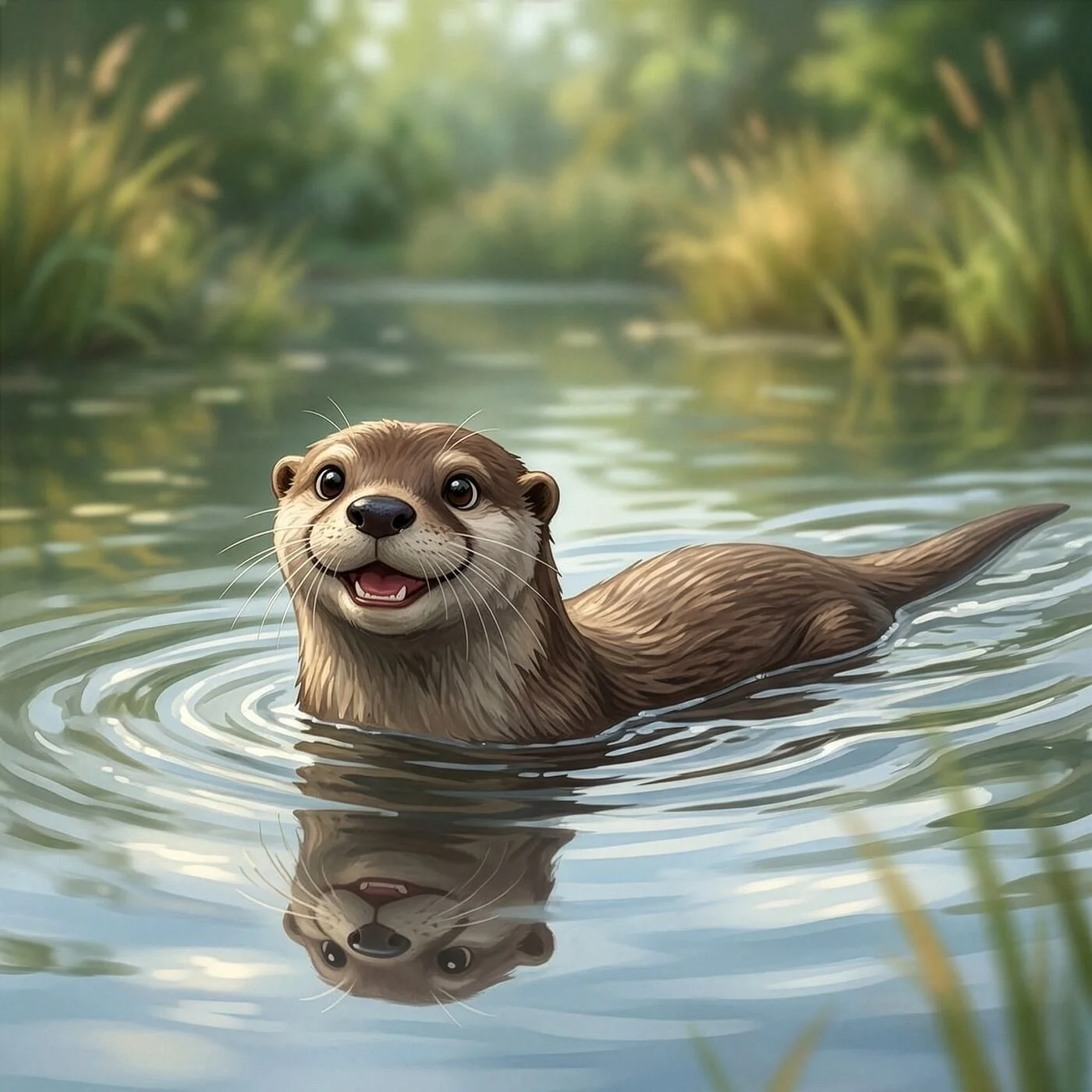
Dai told me something else that unlocked another part of the story: Stackpole’s otters moved between the freshwater lakes and the nearby coast. He said they were sometimes seen at first light returning to the lakes after fishing for food in the sea. Suddenly Niffy and Otto-Fynn belonged to the same world.
Not because I needed two characters to meet. Because Stackpole itself made the meeting possible.
Out of that encounter came Otto-Fynn: curious, impulsive, mischievous and fiercely loyal. Where Niffy hesitates, Otto often moves. Where Otto rushes ahead, Niffy may notice what he has missed.
Otto breaks the rules, forgets the plan, disappears without warning.
He is the first to stand beside you. And the last to leave.
Niffy and Otto are different. And that is why they need one another.
Some characters are found, not invented.
Character
Siôn
A Welsh boy drawn from a brother
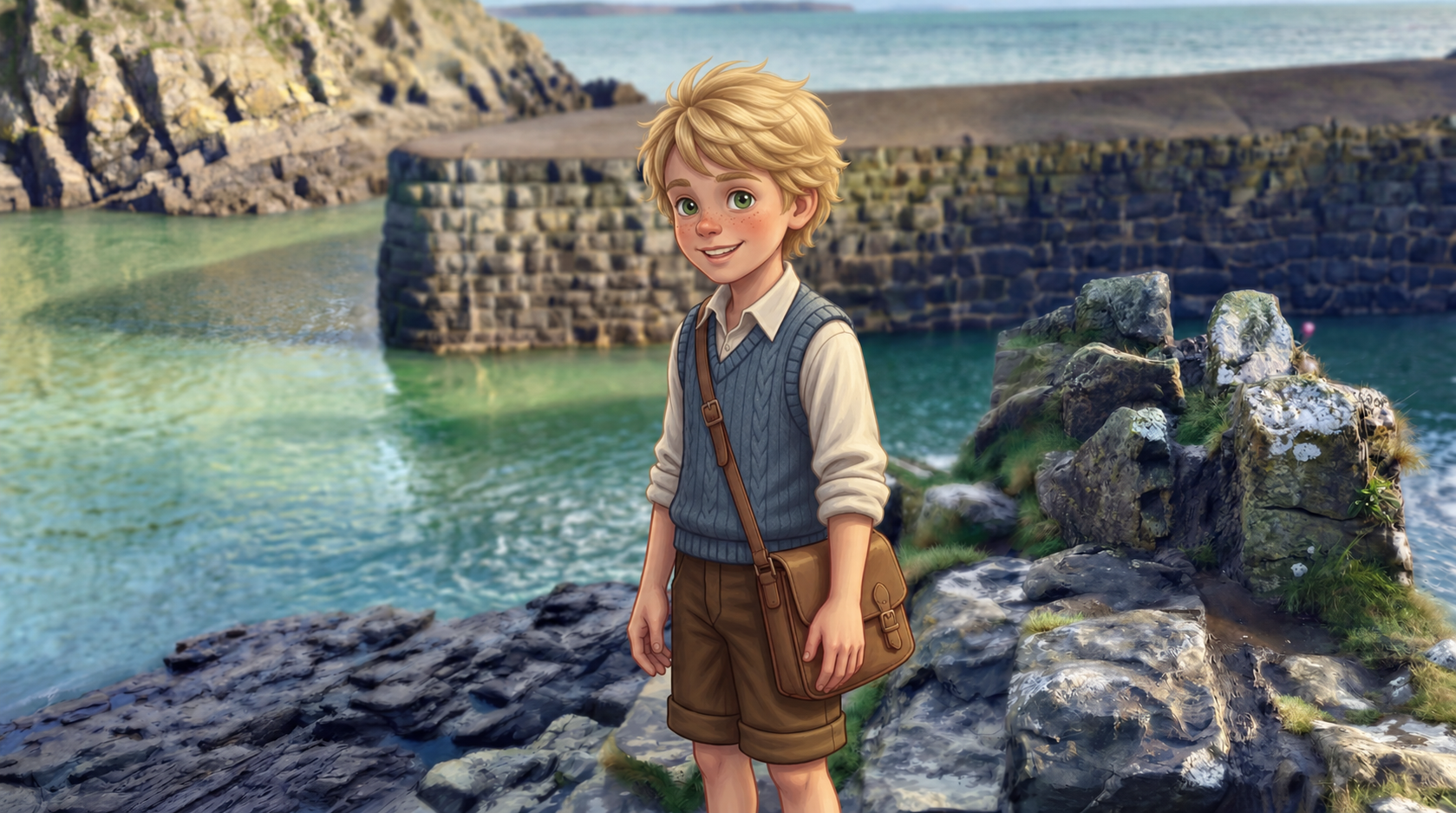
Stackpole Quay, Pembrokeshire.
Siôn is the most personal of the children. He carries something of my younger brother as a boy: a shock of blond hair, a wiry frame, natural charm and a joy for life.
He loved the sea and became a surfer. The Pembrokeshire coast was one of the places where he was happiest. He knew its paths, secret coves and beaches in the way children sometimes know a place: not from maps or guidebooks, but by exploring it.
When I began imagining the boy who would find Niffy at Stackpole in 1945, I found myself returning to him. Not to recreate a life exactly. To recover something of the boy he had been.
Memory in motion
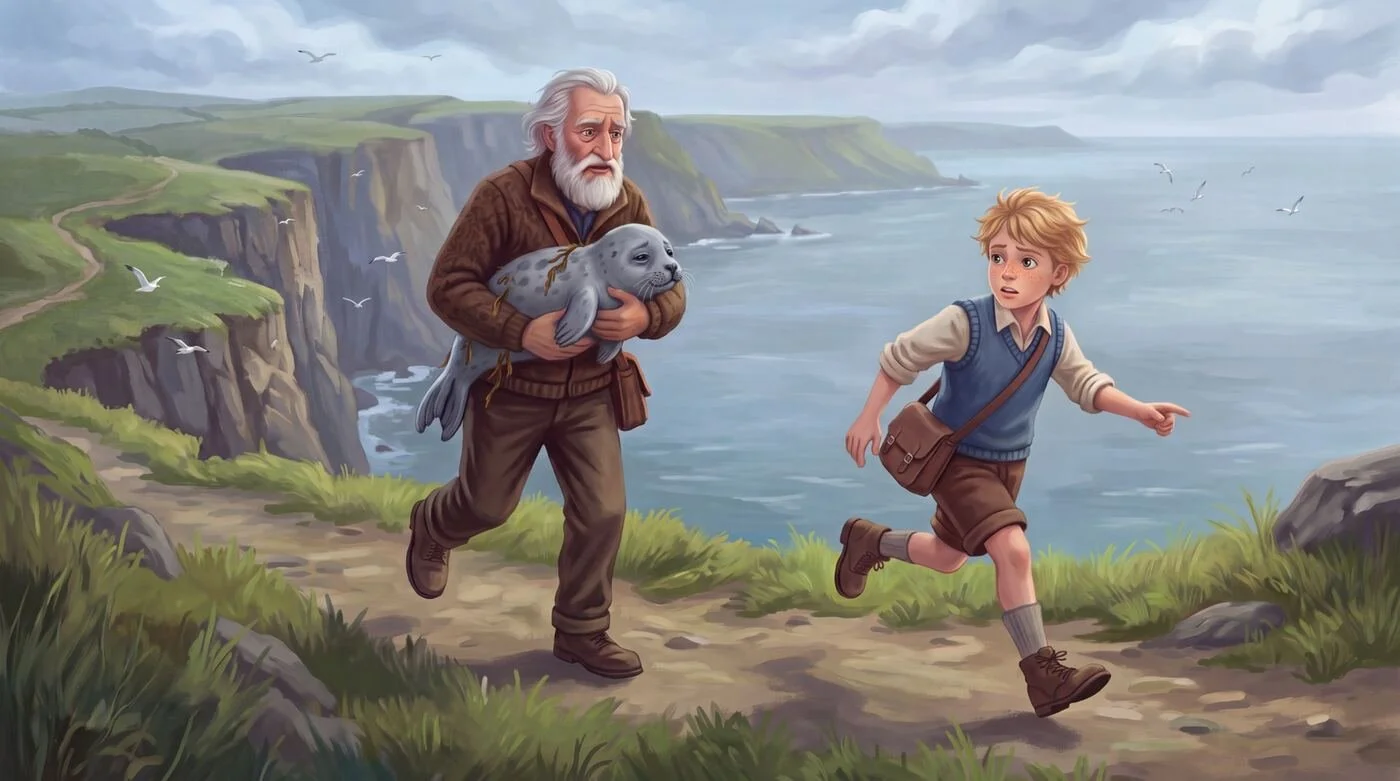
Siôn carries that spirit into The Stackpole Fellowship: adventurous, instinctive, funny and drawn towards the sea. But there is something quieter in him too.
He cares deeply. Sometimes that makes things harder rather than easier. When Siôn first finds Niffy, he cannot know what will happen next. He cannot make the fear disappear.
He can choose to stay. He can go for help. And when the moment comes, he can move.
Some characters help us carry forward the people we love.
Character
Elin
The sister we never had
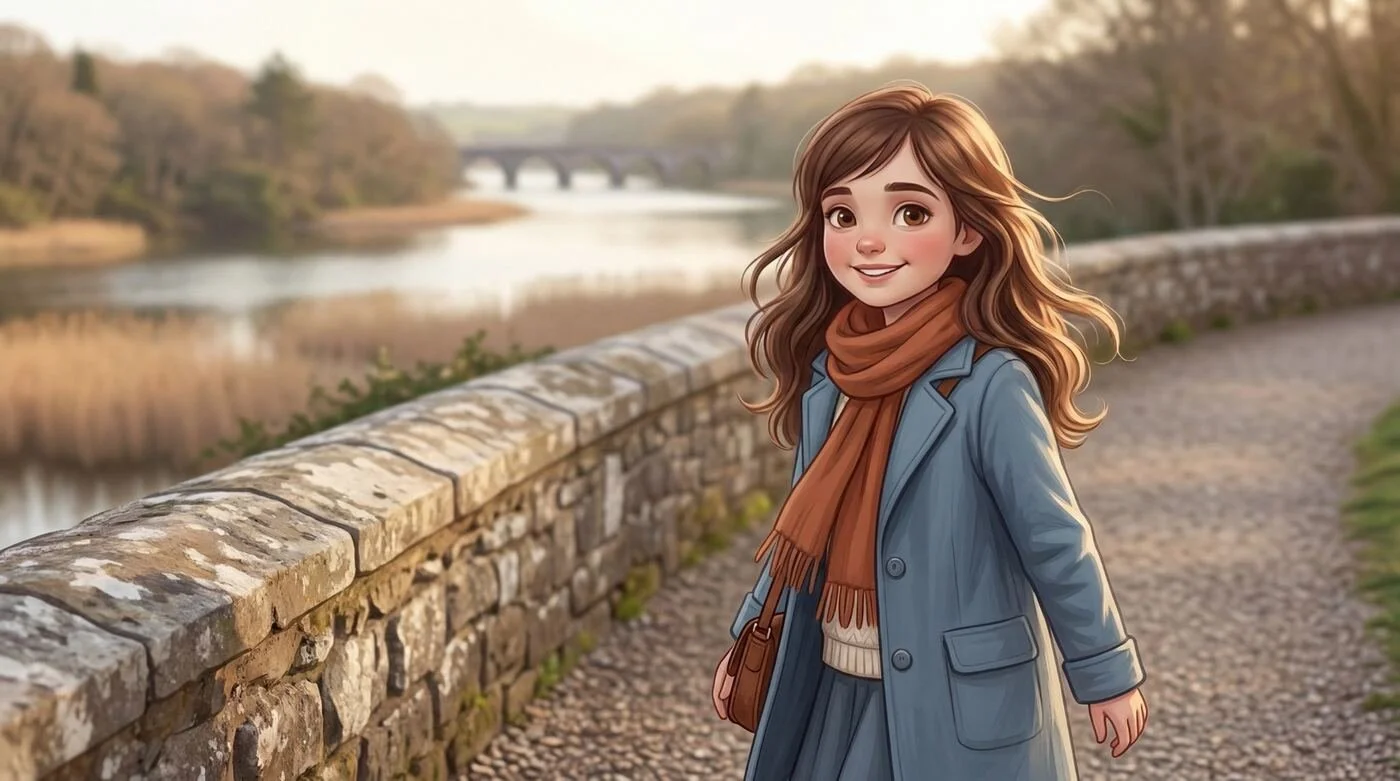
Elin began differently. She is the sister that my brothers and I never had.
When I first wandered around Stackpole, the world of the old estate was completely outside my own experience. I found myself imagining it. What might it have been like to grow up here? What would a young girl living within that world have noticed beyond the house itself?
The lakes. The woods. The people who worked on the Estate. The changing light. The animals. The sea. And what if those things interested her more than the life others might have expected her to lead?
Over time, that imagined girl became Elin. She sees things. She has a love of nature and a desire to capture the seasonal changes in her sketchbook. She notices the details that somebody else walks past.
Her friendship with Siôn is not simply born of a chance encounter. It is a choice - made quietly, made from the heart, made again each morning as the estate calls out to her. The friendship lies between the world she was born into and the one she keeps walking out to find.
I can only imagine the window she looked out of every morning when Stackpole Court still stood. But I know exactly where she crossed the water: the Eight Arch Bridge still provides the limestone arc between her world and his.
A friendship that brings together two children whose worlds might otherwise have remained apart. And it is Elin who encounters the abandoned otter pup on the same day Siôn rescues Niffy‑Nooh. Another path. Another animal. Another piece of Stackpole joining the story.
A character can sometimes be the family we imagined.
Character
Bampi
A grandfather shaped by a father, a friend and the Pembrokeshire coast
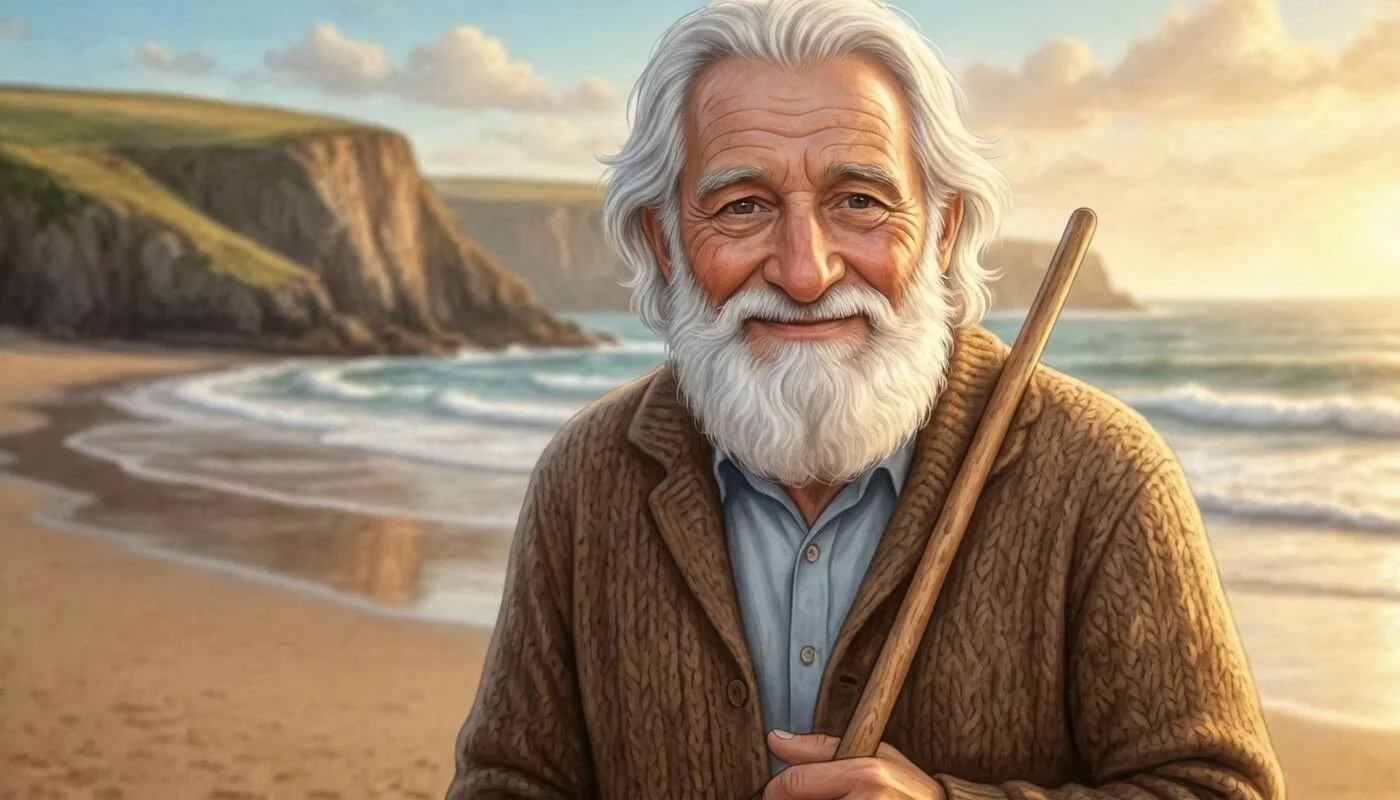
Bampi’s beginnings lie in my home town of Milford Haven. In the early 1990s, I had developed a close connection with the owner of the Waterfront Gallery and had begun collecting the work of local artists.
In 1996, one painting stopped me. It showed a solitary figure on a stony beach, struggling with a complicated knot of rope. I could not see the man’s face. But I saw my father, who had sadly passed the year before. Something about the image seemed to capture the weight of the problems he had wrestled with during his life.
The painting affected me so strongly that I wanted to meet the man who had made it. His name was Philip Muirden. Philip was a larger-than-life creative spirit with a deep love of the sea and the Pembrokeshire coast. We became good friends.
When Bampi eventually emerged, I realised that he carried something of both men: my father in his bearing, resilience and quiet strength; Philip in his warmth, creativity and affection for the coast.
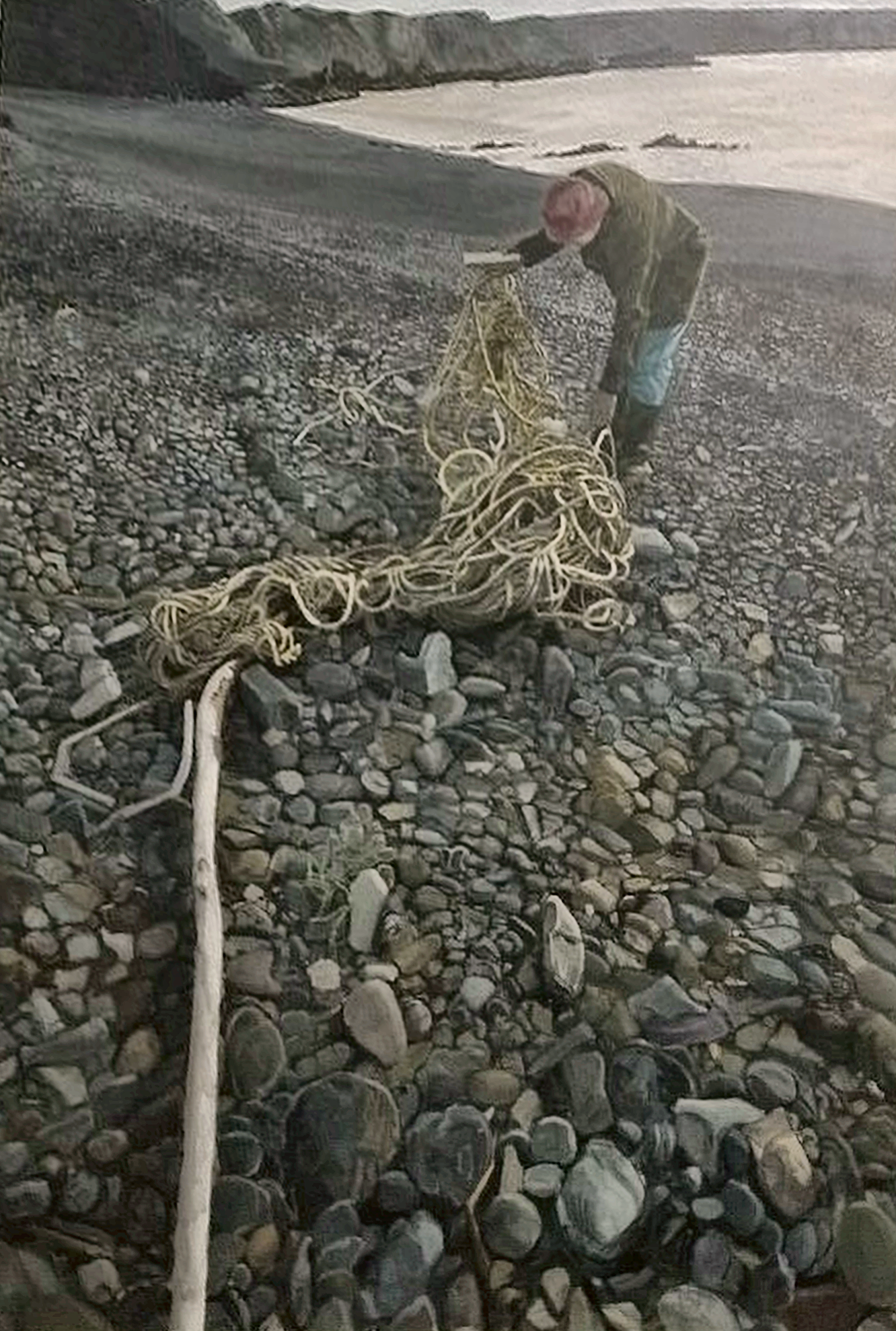
Solitary figure on beach — Philip Muirden, 1995.
Memory becoming care
There was another memory. On the walk from the Waterfront Gallery through Hakin towards Philip's house, I would pass an old storage tank that had been transformed into a makeshift hospital for injured seals after the Sea Empress oil spill.
I remember when that temporary hospital was eventually demolished. And a question stayed with me
“Who had cared for injured seals before places like this existed?”
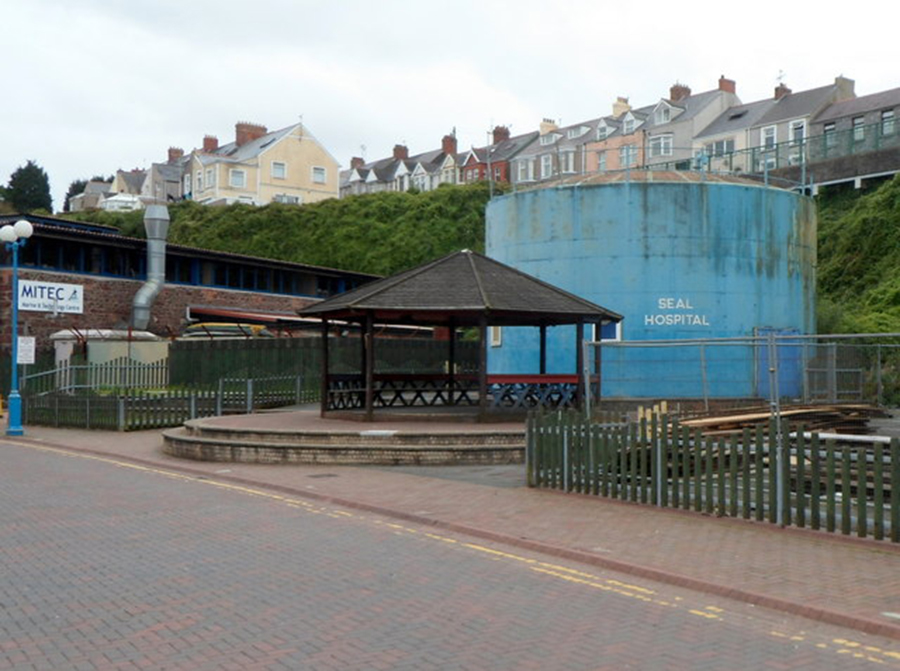
Credit: Milford Haven Seal Hospital, © Jaggery / Geograph Britain and Ireland, CC BY‑SA 2.0.
That question found its way into the story too.
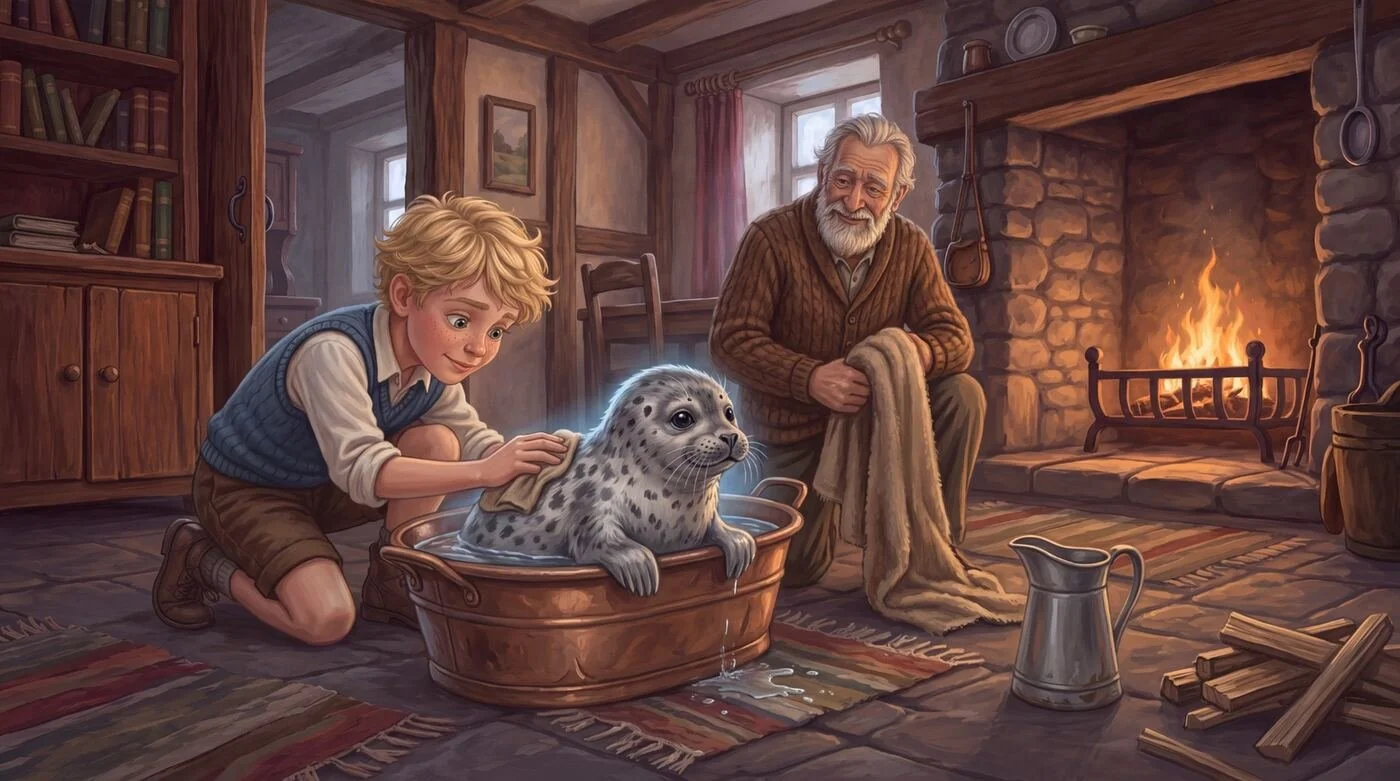
Bampi became the person who might know what to do when a frightened seal pup was carried through his door. But Bampi does not make Siôn’s choices for him.
He can steady. He can remember. He can offer what experience has taught him. Then he must give the children enough room to discover what they are capable of themselves.
A character can be a gift, passed from one generation to another.
The story returns to place
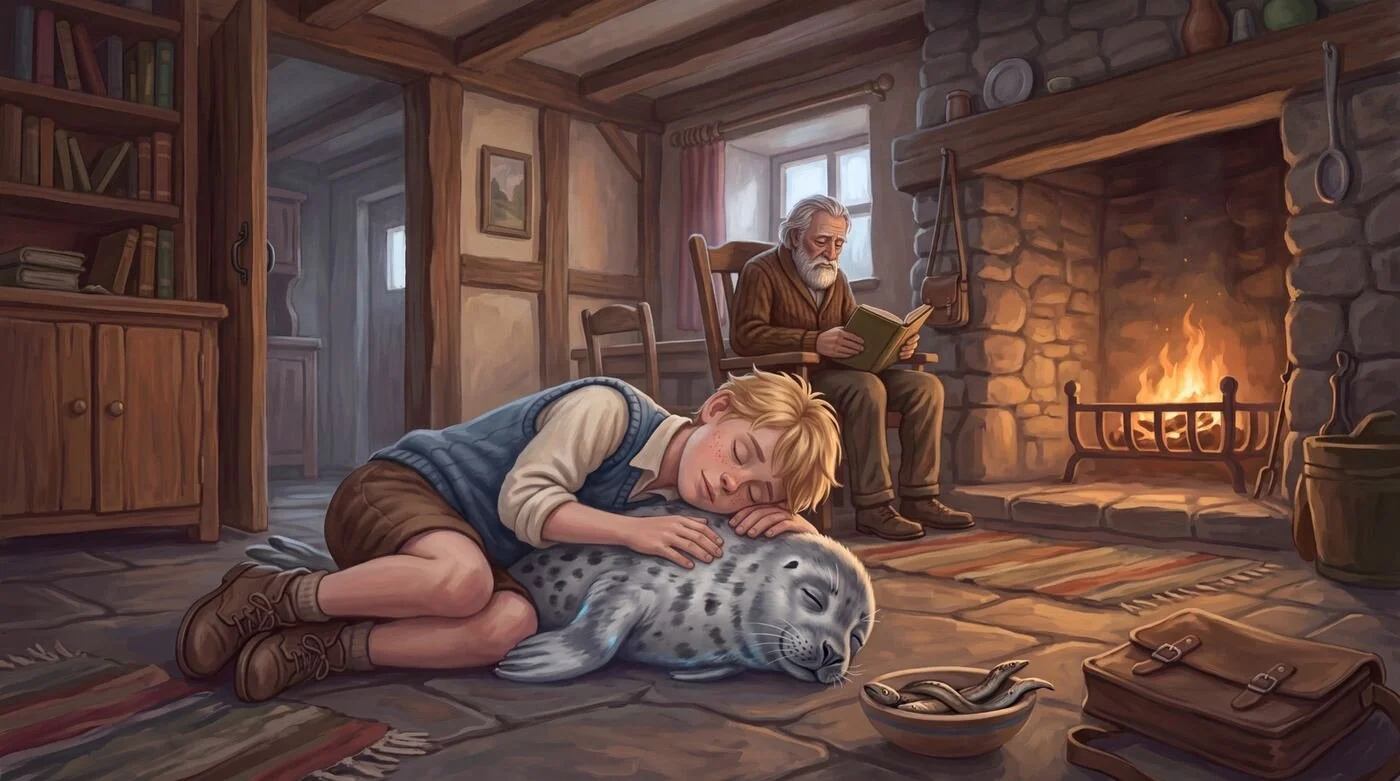
From Stackpole to the story — and back again
Screen to Shore™
The Stackpole Fellowship grew from lived experience, family memory, observation and a long relationship with the Pembrokeshire coast. Its stories and characters are fictional. Their beginnings are not.
They came from animals encountered, people remembered and places returned to again and again.
Today, contemporary production tools, including AI-assisted visual development and rendering, help us explore and realise that world on screen. The stories, characters, scripts, beat sheets and creative direction remain human-authored.
And Stackpole remains at their heart.
Return to place
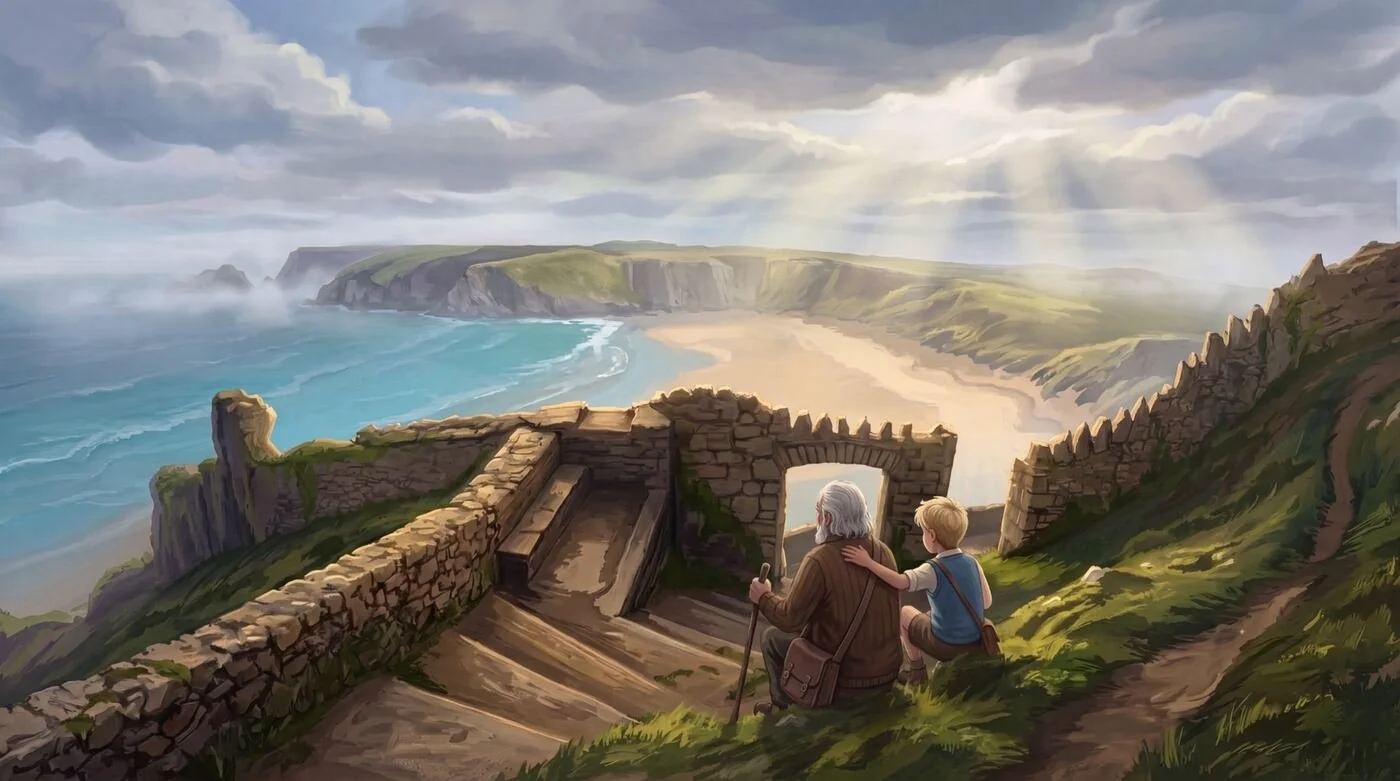
For me, the screen was never meant to be the end of the journey. If a story encourages a child…
to look differently at a seal or an otter…
to wait for bubbles to appear across a pond…
to ask a grandparent about something they remember…
or to arrive at Stackpole already feeling that this place and its creatures matter…
then something has travelled in the other direction.
From story to curiosity.
From curiosity to discovery.
From discovery to belonging.
And, perhaps, from belonging to care.
The first Stackpole micro-dramas arrive this autumn.
Screen to Shore™
The screen is only the beginning.
The Stackpole Fellowship · Magic Lake Pictures